Pets and Critters in Delverium
Catch, house, and use wild critters — pets with personality, trade goods with value, and farm helpers you actually want near the coop.
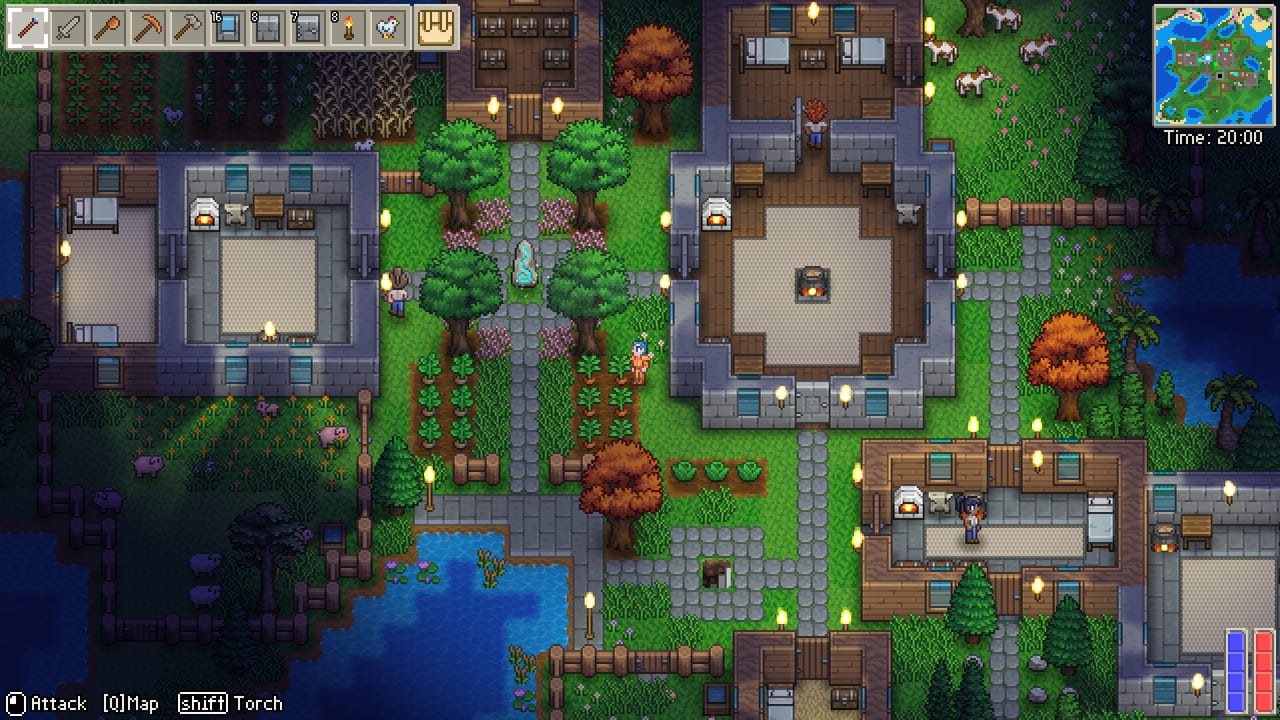
Delverium does not give you a dog at the start. It gives you a world full of small moving things and a bug net. The critter system is one of the less-documented halves of Sagestone Games’ pitch: catch the creatures that wander your starting biome, give them a valid enclosure, and decide whether they live as a pet, a trade good, or a farm labour unit. This page is about that loop. It will not invent species names or invent behaviours that preview players did not confirm. When we do not know, we say so.
Steam Early Access is scheduled for September 22, 2026. Critter types, catch mechanics, and enclosure requirements are based on demo recordings and preview writeups. Early Access may expand the roster, change catch rates, or add breeding. Check the Early Access notes when the store page updates.
What are critters in Delverium
Critters are the small mobile creatures that populate Delverium’s biomes outside of combat enemies. Preview players described them as distinct from hostile mobs: they do not attack, they do not drop combat loot, and they path around the world doing critter things. The demo’s starting biome — the wide grassy area where you spawn — contains at least one type of roaming critter that players used a bug net to catch.
Sagestone’s store copy mentions catching and keeping creatures alongside farming, building, and recruiting. The critter catch mechanic is therefore not an Easter egg or a late-game unlock. It is a day-one system available to any player who crafts or finds a bug net and walks up to a critter they want.
Critters are not the same as livestock. Chickens and sheep in the farming guide are purchased or found, placed in a fence-and-trough pen, and produce eggs or meat. Critters are wild-caught, housed in a different kind of enclosure, and kept for different reasons. Both systems exist in the same world. You can have a chicken coop and a critter terrarium at the same time.
The bug net — craft and use
The bug net is your critter-catching tool. Demo players placed or crafted one after they had a workbench and basic metals. If your build does not show a net recipe in the early workbench menu, check the crafting guide for the full recipe tree. Some recipes wanted copper or similar early metals.
Using the bug net is not the same as swinging an axe. The catch mechanic in Delverium appears to be proximity-based rather than timing-based: walk close to a critter with the net selected, then interact. If the critter is catchable, it enters your inventory or a captured state. Failed catches may consume a use or simply not register. Preview players did not report a stamina or durability cost for failed net attempts, but Early Access may add one.
The net does not work on hostile mobs. Trying to catch a goblin, a bat, or a ghost with a bug net is not a feature. Critters and enemies are different entity types. Your net is for the small moving things you see hopping, crawling, or fluttering near grass, water, or flowers.
Carry the net on your hotbar. Critters wander; you want the tool ready when you see one worth chasing. A critter that hops away while you open your inventory is a lesson in preparation.
Enclosure requirements — not a fence, not a trough
Critter housing in the demo uses a different checklist than the livestock pen from farming. A livestock pen needs fence, gate, and water trough. A critter enclosure in the demo and preview sessions appears to need walls, a door, and a light source — the same room structure you use to recruit NPCs. This is consistent with the room system described in getting started: four walls, a door, a bed, and a light source.
The confusion comes from the word “enclosure.” In Delverium, an enclosure for critters is a valid room, not a fenced yard. Build the critter room the same way you build a room for the blacksmith. Walls on all sides. A door you can close. A light source so the room is not dark. The critter lives in there, not in a pen outside.
One critter per room in the demo, consistent with the one NPC per room rule. If you want multiple critters, you need multiple rooms. Preview players did not report a critter breeding mechanic in the demo; if breeding exists in Early Access, it will use a different room or pen system. We will not invent breeding mechanics before Sagestone confirms them.
What do critters do — pets, trade, and labour
Sagestone’s pitch lists three reasons to keep critters, and the demo and preview coverage supports all three as distinct value propositions.
Pets with personality
The most straightforward use: catch a critter, put it in a room, and watch it move around. Critters in the demo had idle animations — hopping, crawling, making small sounds — that players described as charming. A critter room near your main base is a low-maintenance companion that does not require feeding, does not age, and does not die of thirst. This is not a joke feature. Preview players specifically mentioned critters as a quality-of-life touch that made their base feel inhabited.
A critter room near your spawn point means you see movement every time you open the door. If you are building a base that you want to feel lived-in rather than functional, one critter in a lit room near the bedroom is a simple upgrade.
Trade goods
Some critters or critter-related products may have trade value with recruited NPCs. Preview players did not uniformly confirm a specific “critter sell” mechanic, but the merchant NPC trades materials, and a wild-caught critter is technically a foraged material. If you catch more critters than you want as pets, try selling them to the merchant before releasing them. We will not invent a guaranteed sell price. Check your build.
Critters that are not pets and not sold are released. There is no benefit to keeping a critter locked in your inventory. If your critter room is full and you find another interesting specimen, either make another room or let it go.
Farm helpers (if implemented)
Sagestone has listed critters as potentially providing farm utility in broader marketing copy. This may mean a critter that produces fertilizer, a critter that eats pests, or a critter that increases crop yield. Preview players did not confirm a specific helper mechanic in the demo builds they recorded. Treat farm utility as a potential Early Access or post-launch feature rather than a day-one guarantee.
If your Early Access build includes critter farm helpers, the mechanic will likely tie to the critter being housed in a valid room near your farm plots. A critter in a dark room across the base is not helping. A critter in a lit room next to your crops may trigger the helper effect.
Biome differences and critter variety
The demo’s starting biome — the grassy spawn area — contains at least one critter type. Preview players noted that different biomes likely contain different critter species. A coastal biome may have aquatic critters. A cave biome may have bioluminescent specimens. A forest biome may have canopy-dwelling types.
This is where critter-catching intersects with the biomes guide. If you want a specific critter type, you need to explore the biome that might contain it. Critters do not migrate between biomes in the demo; a grass critter stays in grass. Walking to a new biome is how you find new species.
Do not assume all critter types are catchable. Some preview recordings mentioned critters that fled or were too fast to catch with the net. Catching requires proximity. Fast critters may need a different approach or may not be catchable at all in the current build.
Co-op considerations
In co-op, critters live on the host world the same way crops, NPCs, and structures do. Guest players can help catch critters if the mechanic allows two players to interact simultaneously. If only one player can trigger the catch animation at a time, coordinate who carries the net before you split up to explore.
Critter rooms built by the host are shared. Guests do not need their own critter rooms unless the Early Access build limits critter room access to the builder. Test this early if your group plans to collect specimens together.
Critter catching in split-screen co-op works the same as solo: walk up, interact with the net. The split-screen player’s critter is visible on the shared world map. One net, one catch, shared world.
A practical critter-catching workflow
Based on demo recordings and preview writeups:
- Craft a bug net at the workbench after you have basic metals. See crafting.
- Explore the starting biome with the net on your hotbar. Critters are small and move. Watch for hopping or fluttering near grass and water edges.
- Walk close, then interact. The catch mechanic appears proximity-based. Hold the net, approach, press interact.
- Build a critter room when you have a catch: four walls, a door, a light source. Same as an NPC room.
- Place the critter in the room. Watch the idle animation. If you want another species, explore a new biome and repeat.
- Decide the critter’s role: pet near your bedroom, trade good for the merchant, or farm helper if your build supports it.
Critter catching is a low-pressure system. You will not fail a run because you did not catch a critter. But a critter room adds life to a base that might otherwise feel like a factory floor. See the farming guide for the companion livestock system and the advanced tips for optimisation patterns once your base is established.
For the co-op multiplayer context, read co-op. For the full list of guide pages, return to the guides hub. For the Early Access timeline, see Early Access notes.
Frequently Asked Questions
Quick answers to the most common Delverium questions.
How do I catch critters in Delverium?
Craft or find a bug net at the workbench, carry it on your hotbar, and walk close to a critter you want to catch. Interact to attempt the catch. The mechanic appears proximity-based rather than timing-based.
What is the difference between critters and livestock?
Critters are wild-caught small creatures housed in valid rooms (walls, door, light). Livestock like chickens and sheep are purchased or found and housed in fence-and-trough pens. Both exist simultaneously; see farming.
Do critters need food or water?
Preview players did not report feeding requirements for critters in the demo. Treat critter rooms as low-maintenance: valid room, light source, and the critter lives there. Livestock pens require water troughs; critter rooms do not.
Where can I find different critter types?
Different biomes likely contain different critter species. Explore beyond the starting grass biome to find variety. Critters do not cross biome types in the demo. See biomes.
Can I sell critters?
Critters may have trade value with the merchant NPC since they are technically foraged materials. Preview players did not confirm a guaranteed sell price. Try selling before releasing extra catches.
Do critters help on the farm?
Sagestone has listed farm utility as a potential critter feature. Preview players did not confirm a specific helper mechanic in the demo. Treat farm helpers as a potential Early Access or post-launch feature rather than a day-one guarantee.
Can I have multiple critters in one room?
The demo supported one NPC per room and appeared to follow the same rule for critters. Multiple critters likely require multiple rooms. Breeding mechanics, if they exist in Early Access, may change this.