Delverium Dungeons
Light the dark, mine walls, pick melee or ranged, and treat Faults as a mystery rather than a spoiler dump.
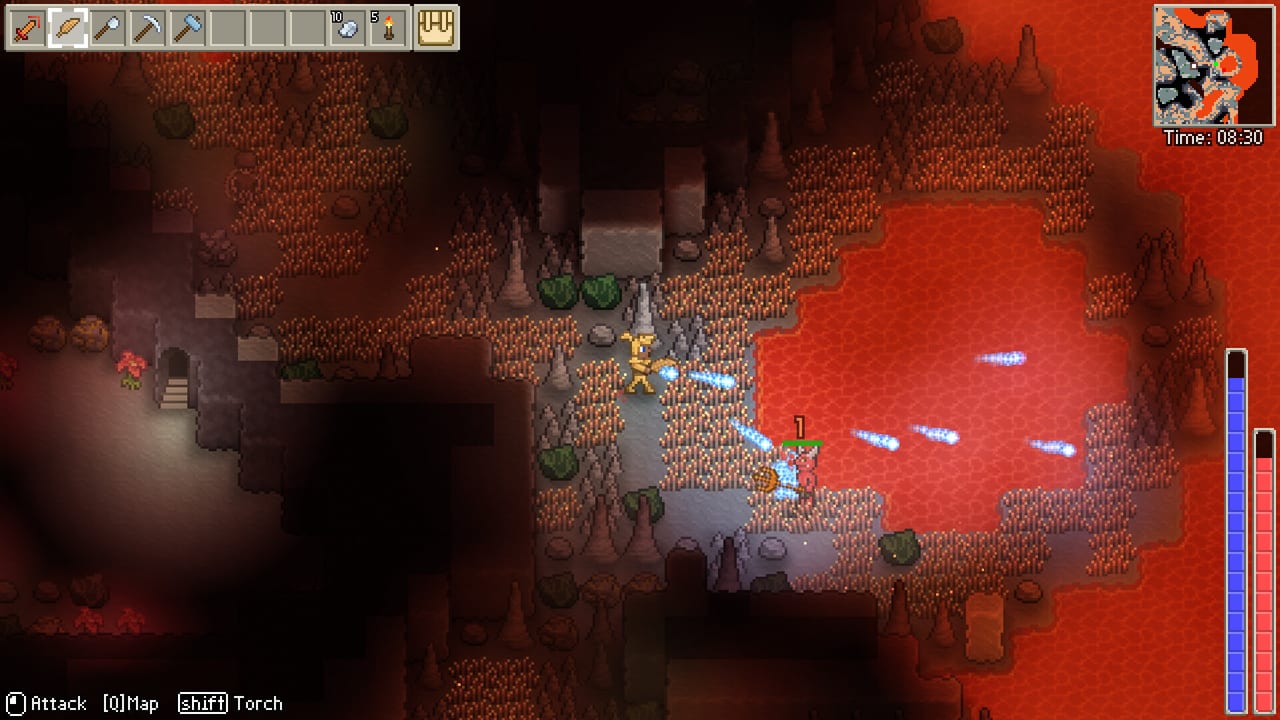
The other half of Delverium is in the ground. Sagestone Games asks you to discover caves and dungeons, mine ores, beat whatever lives in the dark, and bring unique loot home to a farm that still needs watering. Steam’s story hook is larger: a peril infecting the land, lore fragments to uncover, and the Faults to hunt so you can piece together a hidden truth. This guide is a field manual for the demo and for the first weeks after Early Access (scheduled for September 22, 2026). It will not tell you what the Faults “really are.” The studio has not handed out an ending, and this unofficial wiki will not write one.
If your house is still a hole, go back to getting started. If your sword is still a stick and your pockets are fiber, read crafting and farming first. Dungeons punish empty kits. They also punish pride.
Light first, then mining
Darkness is a mechanic, not a filter. Demo players who walked into unlit stone got surrounded. The rule is simple and easy to betray when you are excited:
- Carry torches on the hotbar, not in a chest at home.
- Place torches as you go. Holding a light helps you; placed light helps the you who has to retreat through the same corridor.
- Relight when you open a new room. Bats and ghosts love the tile you decided was “obvious.”
The pickaxe is how dungeons become maps instead of hallways. You can mine ore and you can mine walls to open a path, skip a choke, or connect two caves. That does not mean you should Swiss-cheese the biome on the first visit. Every hole is a new angle for wasps. Mine a vein, mine an escape, then stop. The hammer is the wrong tool here; it is for house rocks. If you brought only a hammer, you are on a construction trip, not a delve.
Journey shrines (fast travel added around the multiplayer demo update) are how you get the ore home without walking the entire overworld in the dark. Activate them when you see them. They are not a second inventory.
Melee versus ranged
Combat splits along two kits:
- Melee — sword or axe. Hits in a facing arc. Good for zombies in a doorway you control, bad for goblins who would rather not stand in that doorway.
- Ranged — bow or staff. Bows want ammunition from inventory; staves want mana. Preview notes describe bows as the precise option and magic as the messier, sometimes wider option. We will not quote fake damage.
Tools can swing in a panic. An axe will kill a zombie in the first hour; it will not save you from a stacked pack of spectres. Preview writers who died on a goblin coast went home, sold materials, nested a real weapon and a set of armor, and only then returned. Copy that. The tier list can argue about which metal is fashionable after Early Access has a patch history. Your first upgrade is “anything that is not a hoe.”
Aiming is mouse or right stick; use/fire is left click or right trigger. If you keep attacking merchants, your interact bind is wrong — fix it on the controls page before the next corpse run.
Early threats (demo and previews)
Enemies you should expect to see in footage and hands-on reports:
- Zombies — surface nights and shallow caves. Slow until you ignore them while placing a torch.
- Bats — indoor pests that find the one missing wall tile.
- Goblins — the first “this is not a farm game today” check. Some recordings show magic shots. Do not duel a group in the open with starter tools.
- Wasps — readable if you keep moving; ugly if you stand in a corner to open inventory.
- Ghosts and spectres — the “you walked too far” alarm. When the pack composition goes supernatural, you are under-geared or under-lit. Leave.
The demo includes an early boss. Players have beaten it and sometimes received a notable drop (a bow in one public recording). Treat that as a gear check with a door. If you cannot place torches and still have food, you are not late for the boss — you are early. Bosses will multiply across Early Access; Sagestone has said 1.0 and the EA years should add more of them. This page will not name a final boss that does not exist yet.
Food is how preview players described recovering from those fights. Pack cooked stacks from the homestead. Raw forage is a backup, not a plan. If you are dying on the walk to the cave, the farm is the missing weapon.
Faults, lore fragments, and what not to spoil
Steam’s copy is the whole canon we will repeat:
- A great peril is infecting the land.
- You uncover lost fragments of lore.
- You hunt the invading Faults to piece together Delverium’s hidden truth.
That is a mystery structure, closer to “read the environment” than to a cutscene novel. If you find a fragment, keep it, read it, and do not race to a wiki comment that claims to have finished the plot. This fan site will log how to look — light, mine, fight, leave — not a lore ending. When Sagestone ships more story during the up-to-two-year Early Access window, the updates hub is where new official language belongs.
If a cave feels wrong in a way that is not just bats — a shift in palette, a density of ghosts, a structure that does not look like a mine — mark it and return with better kit. Curiosity is the content. Under-levelled curiosity is a corpse at a shrine.
A delve kit you can actually carry
- Pickaxe, torch stack, melee weapon, ranged option if you have ammo or mana.
- Cooked food, not a decorative herb.
- A bed already set at home so death is a commute.
- Inventory space. Expandable bags exist for a reason; ore plus loot plus bats is how you drop the pickaxe.
- A reason to go home. Water the farm. Sell to the merchant. Nest the next pickaxe at the furnace. The dungeon will still be there.
In co-op, split jobs: one player lights, one player mines, one player watches the corridor. Four people in the same dark tile is a pile of ghosts. On split-screen, zoom out (see controls) so you can see the hole in the wall.
The review is honest about the comparison stack — Terraria, Stardew, Necesse, Core Keeper — and about Early Access risk. Dungeons are the part that will grow the most if Sagestone keeps the 1.0 promise of extra biomes, bosses, and loot. Until those patches exist, crawl what is in front of you and take notes. Confirm dates and features on the Delverium Steam page and the links hub. If the host PC is the bottleneck, check system requirements before you blame the bats.
Last rule: when you cannot see the floor, you are not exploring. You are volunteering. Place the torch, then take the step.
Frequently Asked Questions
Quick answers to the most common Delverium questions.
What tools do I bring into a Delverium dungeon?
A pickaxe for ore and walls, torches you will place, and a melee or ranged weapon. The hammer stays home with the house rocks. Prep is in getting started.
Should I use a sword or a bow?
Melee (sword or axe) for doorways you control. Ranged (bow or staff) for goblins and anything that will not stand in your arc. Bows need ammo; staves need mana.
What enemies show up early?
Previews and the demo show zombies, bats, goblins, ghosts, wasps, and spectres, plus an early boss. Leave when the pack turns supernatural and you are still in starter gear.
What are the Faults?
The store describes them as invading corruption tied to lore fragments and a hidden truth. This unofficial wiki will not invent an ending. Track official language on Early Access notes.
Why do I keep dying in caves?
Can friends split dungeon jobs?
Yes. One lights, one mines, one watches the hall. Host rules and player caps are on co-op.