Combat in Delverium
Weapons, consumables, stances, party roles, dodge mechanics, and how to read the things that want to kill you in the dark.
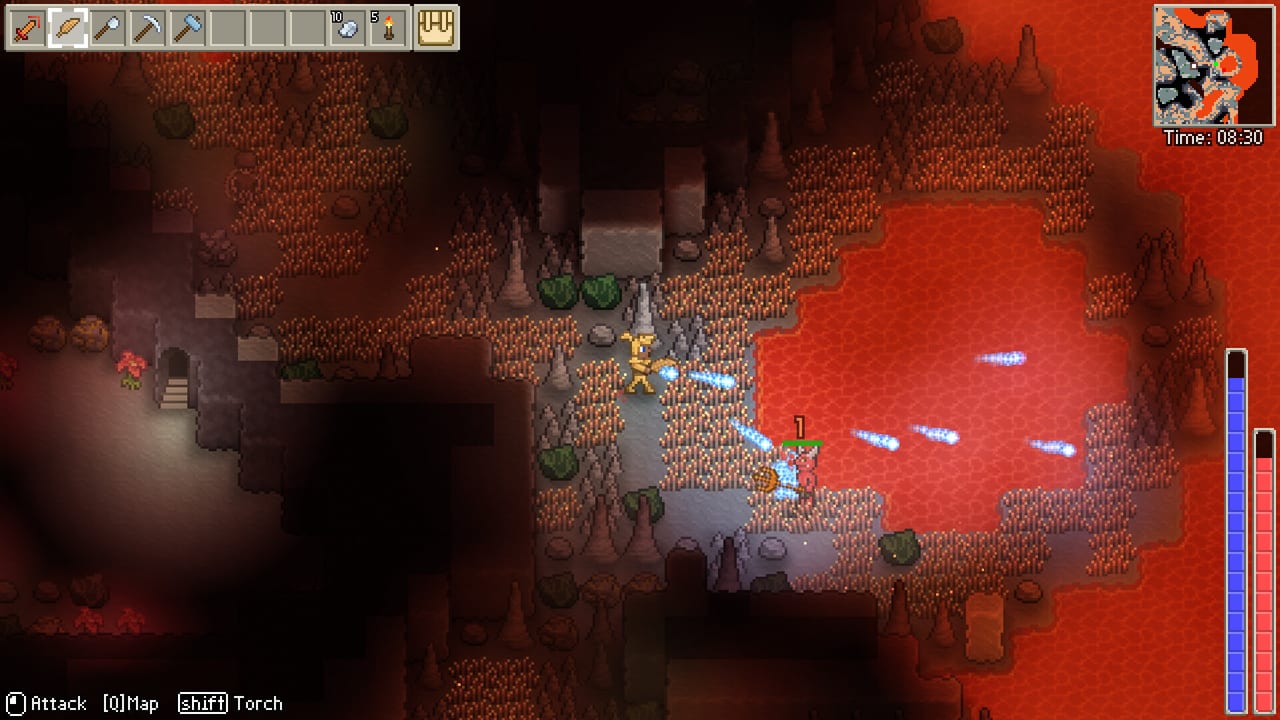
Combat in Delverium is not one system. It is a conversation between your tools, your positioning, and whatever the dungeon decided to put in the room with you. Sagestone Games builds on the survival-sandbox tradition — gather, craft, raise a base — then asks what happens when you take that base-building kit into procedurally generated caves full of things that would rather you did not leave. This guide covers the combat layer: weapons, consumables, stances, party roles, and the specific enemies that preview players have reported in the demo and early-access window.
If your house is still a hole, go back to getting started. If your only weapon is a hoe, nest a real kit in crafting before you read any further. Dungeons punish empty pockets; combat punishes the assumption that a hoe is a weapon.
Weapon types: melee, ranged, and magic
Delverium separates combat into three families:
Melee — swords and axes. Damage lands in a facing arc in front of your character. Melee is the control option: you pick the doorway, you decide when the zombie walks into your arc, and you end the conversation on your terms. It fails when the room has no chokepoint or when the enemy decides to not stand in your arc. Axes do more damage per swing; swords swing faster. Neither is objectively better. The tier list will argue about numbers after Early Access has a patch history. Your job right now is “anything that is not a hoe.”
Ranged — bows and staves. Bows fire physical ammunition from your inventory. Staves fire mana. Preview descriptions call bows the precise option and magic the messier, sometimes wider option. That width is not always a gift: a staff that hits multiple targets will also pull multiple aggro. Ranged fails when you run out of arrows or mana mid-room and when you stand still long enough to get surrounded. Keep moving.
Ammo and consumables — arrows are physical inventory items; mana regenerates or comes from potions. Torches are a consumable you place, not just hold. Food restores health between fights, not during them. Bombs, potions, and thrown items round out the kit. Carry what you will use, not what you might use. Inventory space in Delverium is real and limited.
Aiming is mouse or right stick; fire or use is left click or right trigger. If you keep attacking merchants, your interact bind is wrong — fix it on the controls page before the next corpse run.
Combat stances and positioning
There is no formal stance system in the demo, but preview players describe two implicit positions:
Doorway control — the single-file advantage. Melee users stand in a doorway, let zombies walk into the arc one at a time, and retreat when the room is clear. This fails when you do not have a doorway, when the enemy ranged attacks through the doorframe, or when a bat finds the missing wall tile above your head.
Open-field kiting — ranged users and high-mobility melee users move through open caves in a pattern, placing torches as they go, pulling one group at a time. This fails when you miscount the groups, when the cave is too dark to see the floor, or when you round a corner into a pack you did not invite.
Both positions share one rule: never fight in the dark because a trailer looked exciting. Light is not atmosphere. It is information. Placed torches show you the floor, the enemies, and the exit. Holding a torch shows you what is directly in front of you. The difference matters when you are retreating.
Party composition in co-op
In co-op (solo, 4-player split-screen, 8-player online, or mixed), split the kit:
- One player lights — places torches and maintains visibility.
- One player controls — melee in the doorway, holds aggro.
- One player deals damage — ranged or high-damage melee from a safe angle.
- One player watches flanks — the bat that found the missing wall, the add that spawned behind.
Four people stacked on the same dark tile is a pile of ghosts, not a strategy. Host rules and player caps are on the co-op page. The world lives on the host PC while that player is online. There is no official dedicated server; third-party Lodestone hosting exists and is covered on the dedicated servers page.
Dodge, fall, and movement mechanics
Delverium does not have a dedicated dodge roll in the demo. Movement is standard: run, jump, place a torch, and use terrain. What it has is:
Fall damage — significant in cave environments. A drop that looks fine on the surface can kill a full-health character underground. Check your footing before you commit to a ledge. Knockback — enemies and some attacks push you. In a doorway this is an asset (push the zombie back). In open terrain this can send you into a corner you cannot escape. Terrain as cover — mineable walls mean you can create your own chokepoint. The pickaxe is a combat tool, not just a mining tool. If a corridor is too wide for melee control, mine a rock into the path and make it a door.
Dungeon enemy types
Preview players and demo footage show these enemies:
Zombies — surface nights and shallow caves. Slow, predictable, and manageable in a doorway. They become dangerous when you ignore them while placing a torch and three more walk into the room behind you.
Bats — the indoor pest. They find the one missing wall tile and spawn in groups. If a room has an open ceiling you cannot see, assume bats. They are individually weak and collectively a distraction that gets you killed by the thing you were actually fighting.
Goblins — the “this is not a farming game today” check. Some recordings show them firing magic shots. They do not stand in your melee arc by default. Ranged weapons or kiting are the answer; a heroic melee stand in the open against a goblin group is a corpse run.
Wasps — readable if you keep moving, ugly if you stand still. Their attack pattern is telegraphed and their health is low. The failure mode is not the wasp — it is the inventory screen you opened in the corner while the wasp was still in the room.
Ghosts and spectres — the “you walked too far” alarm. When the enemy pack composition goes supernatural, you are under-geared, under-lit, or in a part of the cave you should not have reached yet. Leave. Come back with better tools.
The Faults — the named invading force described in Steam’s copy. In the context of combat, the Faults function as elite-tier enemies: harder to read, harder to kill, and tied to the lore fragments you collect. Preview players describe encounters with Faults as the “you need real gear” check, similar to the first boss. Treat them as a gear and preparation gate, not as a puzzle you solve with starter tools.
Combat versus the Faults
The Faults are not a standard enemy type. Steam describes them as an invading force tied to the lore fragments and the hidden truth of Delverium. In practical terms, this means:
- Faults encounters are rare and tied to specific locations or triggers.
- They hit harder than the zombie-bat-goblin rotation.
- They drop notable loot tied to the lore progression.
- They are the combat ceiling before the first boss and the boss itself.
Do not hunt Faults in the first hour. Do not assume the dungeon you are in is the Faults dungeon. Read the environment, collect fragments, and return to Faults content when the dungeons checklist (light, pickaxe, real weapon, cooked stack) is automatic rather than aspirational.
The first boss page covers the demo’s early boss fight, which preview players have titled Critical Error. This page does not repeat that fight’s details; it focuses on the general combat loop that leads you to that door.
A combat kit you can actually carry
- Pickaxe (combat tool, not just mining tool).
- Torch stack on the hotbar, placed as you go.
- One melee weapon you trust in a doorway.
- One ranged option if you have ammo or mana.
- Cooked food, not a decorative herb.
- A bed already set at home so death is a commute.
- Inventory space. Ore plus loot plus panic-picked junk is how you drop the weapon you came with.
If the combat loop feels like it is costing too much, the farm is the missing weapon. Water the crops. Sell materials. Nest the next upgrade at the furnace. Then return to the cave.
Confirm dates, features, and enemy names on the Delverium Steam page and the links hub. Early Access runs from September 22, 2026 for up to about two years. Bosses, biomes, and enemy types are on Sagestone’s list of things that should grow.
Last rule: when you cannot see the floor, you are not fighting. You are volunteering. Place the torch, then take the step.
Frequently Asked Questions
Quick answers to the most common Delverium questions.
What weapons should I use in Delverium dungeons?
Melee (sword or axe) for doorway control. Ranged (bow or staff) for enemies that will not stand in your arc. Bows need ammo; staves need mana. The first upgrade is anything that is not a hoe. See the tier list for metal rankings after Early Access has patch history.
How do I manage ammunition and consumables?
Count arrows and mana before entering a room, not during the first volley. Carry torches on the hotbar, not in a chest at home. Food restores health between fights, not during them. Bombs and potions are situational; pack what you will use.
What is the best party composition in co-op?
One lights (places torches), one controls (melee in doorway), one deals damage (ranged or high-damage melee), one watches flanks (bats and adds). Four people on the same dark tile is a pile of ghosts. Host rules and caps are on co-op.
What are the Faults and how do I fight them?
The Faults are the invading force tied to Delverium's lore fragments and hidden truth. They function as elite-tier enemies: harder to read, harder to kill, and tied to notable loot. Do not hunt them in the first hour. Return with real gear.
Why do I keep dying to bats and goblins?
Is there fall damage in Delverium?
Yes. Cave drops that look survivable on the surface can kill a full-health character underground. Check your footing before committing to a ledge. The pickaxe can mine terrain to create safer paths.