Farming in Delverium
Hoe, watering can, livestock pens, cooking, and why a small plot beats a dead dungeon run.
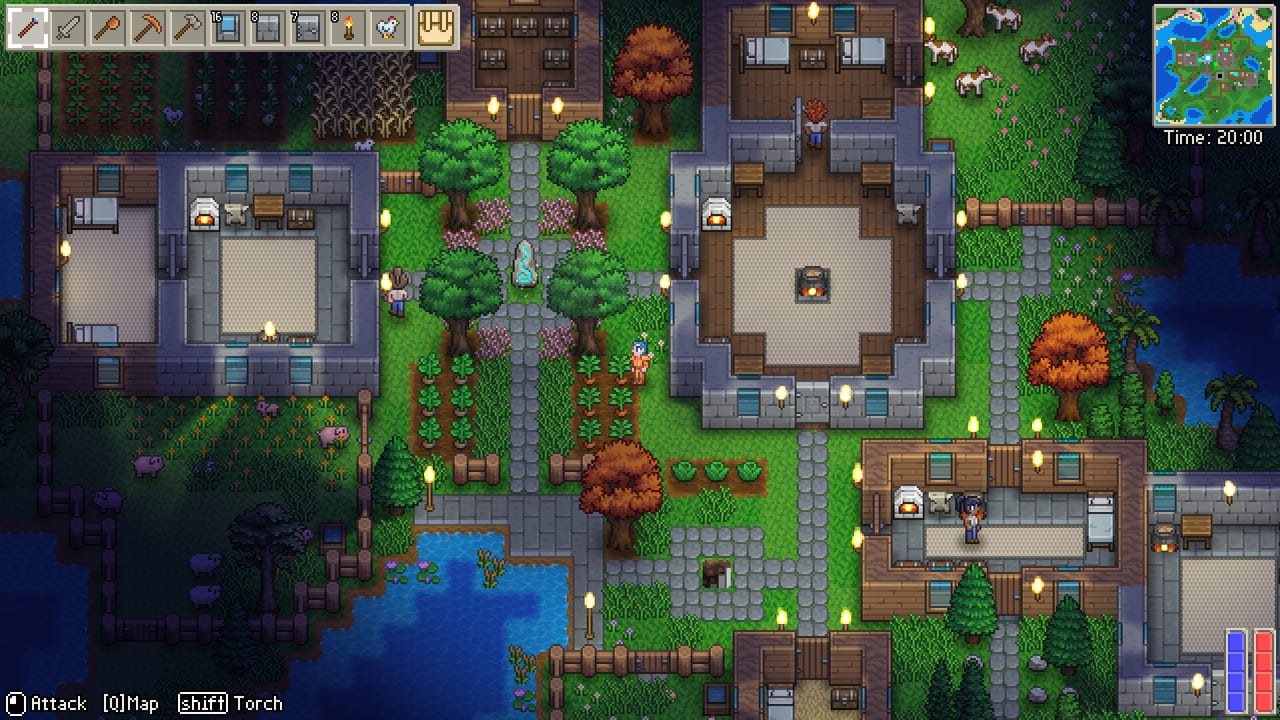
Delverium’s pitch puts a farm next to a dungeon on purpose. Sagestone Games wants you to till soil, plant seeds, water crops, raise animals, catch fish, and fold wild ingredients into cooking you can eat or sell. That loop is not a side minigame you unlock after the “real” content. In the free demo (on Steam since February 2025) and in preview sessions, players who ignored food bounced off goblins and ghosts with empty pockets. This guide is the homestead half of the game. Pair it with getting started on day one and with crafting as soon as you need a hoe, a can, a cook station, and a trough.
Early Access is scheduled for September 22, 2026. Crop lists, growth times, and shop prices will move. We will not print a fake almanac. We will describe the verbs the store page and demo players agree on, then tell you where people get greedy.
Till, plant, water
The agronomist NPC is the in-world tutorial. Preview dialogue is blunt: till soil, plant seeds, give them water (and fertilizer when you have it), then harvest. Tools:
- Hoe — turns a patch of world into a bed you can plant. Till next to the house, not a scenic meadow a sprint away from your door. Night zombies do not care that your tomatoes are pretty.
- Seeds — forage them, buy them, or earn them through play. Demo players reported early crops such as carrots and tomatoes, plus odds and ends like mushrooms and medicinal herbs in bags. Treat those names as demo snapshots. Plant a mix, not a monoculture you saw on a thumbnail.
- Watering can — still required. Demo players described watering as lower-friction than Stardew Valley: less of a daily punishment, not a skipped step. One recording noted a watering can recipe that wanted copper, so your first rows may wait on a furnace. If the can is locked behind metal, till fewer tiles than you want. A dry field is a decoration.
Water from the can and water in a livestock trough are different jobs. Do not assume filling a pen waters the farm. Walk the rows. If a build makes moisture obvious (darker soil, a meter, a sparkle), trust the UI; if it does not, water anyway and watch the plants. We will not invent a “skip watering forever” trick because a streamer watered less often than they do in Stardew.
Keep the hoe and can on the hotbar. The controls guide is relevant here: the same use button that swings a sword will water a tile if the can is selected, and will hoe a friend if it is not. Switch tools on purpose.
Livestock: fence, gate, trough
Animals in the demo and previews are chickens (chicks) and sheep (lambs). You find them on the map or you buy them from the agronomist once that NPC has a valid room. A valid enclosure is not a vibe; it is a checklist:
- Fence around the area.
- A gate you can open without breaking the fence.
- A water trough inside.
No trough, no ranch. Preview writeups and fan notes agree on that three-piece pen. Larger pens hold more animals; start smaller than your ego. Chicks become chickens and produce eggs. Sheep are the meat-and-materials side of the same system. Breeding is on the Steam feature list (“breed animals”). Exact breeding timers and baby names are the kind of number this wiki will not fake.
Build the pen where you can see it from the door. Escaped chickens during a goblin raid is a comedy the first time. Place the gate facing the house so you are not kiting a lamb through a crop row. If you need more animals than the agronomist will sell today, go walk the starting biome with an empty slot instead of punching the shop UI.
A bug net showed up in at least one preview as a way to catch roaming critters. That is extra protein and trade bait, not a replacement for a pen. If the recipe exists in your build, craft it after the trough, not before the walls.
Cooking is why the farm exists
Steam’s farming blurb is a recipe sentence: combine harvests with fish, wild ingredients, and animal products into cooking you eat or trade. Demo players described cooked food as health recovery rather than a hunger meter they had to babysit — again, a snapshot, not a promise for 1.0. What is consistent:
- Raw forage keeps you alive while you build.
- A cook station (preview players placed a cook pot; some recipes wanted copper) turns the same forage into something you would rather take into a cave.
- Eggs, meat, fish, and herbs are for the pot, not for cluttering the expandable inventory forever.
Nested crafting applies here the same way it applies to bars and swords: if the recipe wants a processed ingredient and you are standing near the right station, the game can pull the nested craft instead of making you pre-cook every piece by hand. Details live in crafting. Do not stand in a dungeon crafting bread. Cook at home, pack a stack, leave.
Fishing is listed among systems Sagestone wants in the fuller game and among features already called out for Early Access. The demo’s fishing depth has changed across updates. If your build has a rod, fish the water you already live next to. If it does not, wild ingredients and eggs still make a kitchen.
Trading food, not hoarding it
Recruited NPCs buy and sell. The merchant and gatherer will take materials; the agronomist is the farm shop; the blacksmith is not where you dump tomatoes. Food you will not eat by tomorrow is stock. Food you need for the dungeons run is kit. Split the chest: kitchen up front, sell crate by the merchant’s door.
Recruiting still uses the same room rule as the rest of the game — walls, door, bed, light source — so your agronomist is a construction project, not a menu unlock. Build that room before you till a field the size of a Terraria arena. A farm without a shop is a chore. A shop without a farm is a blacksmith who wonders why you are broke. NPC roles are listed on the players hub. If you start ranking seeds and cooked dishes, use the tier list as a living argument, not as a shopping list from a finished MMO.
A homestead that supports delving
The embedded video on this page is a first look at farming and a homestead, not a 1.0 documentary. Watch it for layout: house, plots, pen, path. Then steal only the discipline:
- Four to eight tilled tiles you will actually water beat twenty tiles you will forget.
- One trough and two chickens beat a zoo you cannot feed with attention.
- Cook before you walk to a cave. Ghosts and spectres do not wait while you remember you brought raw fiber.
- Journey shrines help you return to water the farm after a delve. Activate them when you pass; do not skip the can because fast travel exists.
If you are playing with friends, assign the farm. Split-screen is how someone waters while someone else mines, which is the whole point of co-op. If you are here to decide whether the cozy half is enough to wishlist, read the review. For the calendar, price-rise warning, and the two-year Early Access window, use Early Access notes. Official store and social links sit on the links hub.
A last practical warning: Delverium will let you play as a chicken farmer who never sees a Fault. That is allowed. It is also how you miss the other half of the pitch. Keep a pickaxe on the porch. When the plot is watered and the trough is full, take a torch and walk until the grass changes. Then come home and cook whatever you found.
Frequently Asked Questions
Quick answers to the most common Delverium questions.
Do Delverium crops need watering?
Yes. You till, plant, and water. Demo players called watering lower-friction than Stardew Valley, not optional. Keep a watering can next to the hoe.
How do I keep chickens or sheep?
Build an enclosure with fence, a gate, and a water trough, then find chicks or sheep on the map or buy them from the agronomist. See the players hub for that NPC.
What do I cook with?
Crops, fish, wild ingredients, eggs, and meat. Preview players used a cook pot once they had the metals for it. Station proximity and nested recipes are in crafting.
Should I farm before I enter dungeons?
A small watered plot and a cooked stack will save more runs than a bigger sword. Read dungeons when you have food, then come back to water.
Where should I plant?
Beside a closed house with a door, bed, and light — the same first shelter as getting started. Night enemies path into isolated fields.
Will Early Access add more crops and animals?
Sagestone plans more biomes, NPCs, and features across up to about two years of Early Access. Treat demo seeds as a snapshot and watch Early Access notes.