Crafting and Building in Delverium
Nested recipes, craft-and-build in place, furnaces, rooms, and an inventory that is supposed to grow with you.
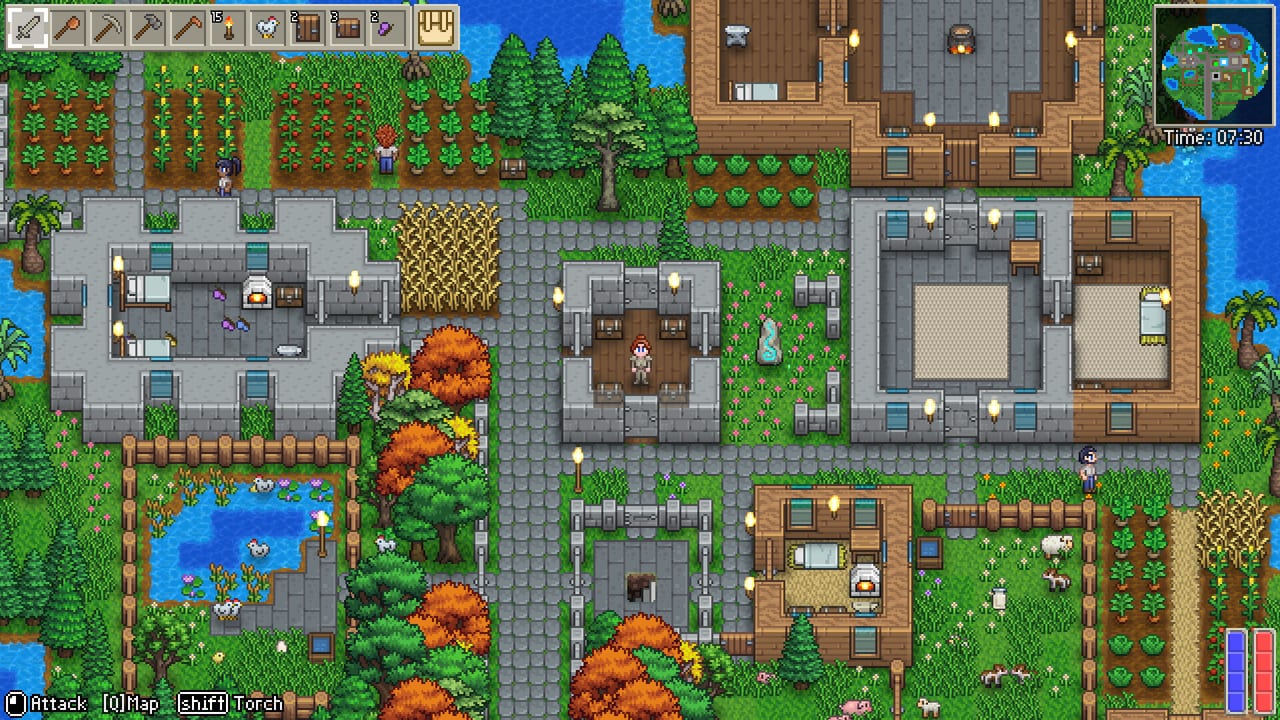
Delverium’s quality-of-life pitch is specific: nested crafting, an expandable player inventory, and the ability to craft and build in place instead of living inside a grid UI. Sagestone Games wants food, tools, weapons, armor, and building materials to unlock as you play, then wants those pieces to become a settlement that can hire NPCs. This page is the workbench half of the first week. It assumes you have already closed a box of walls from getting started. It will not dump a fake recipe book with invented item IDs.
Steam Early Access is scheduled for September 22, 2026. The free demo has been on Steam since February 2025. Stations and costs you see in a 2025 recording can move. When demo players named a station, we name it as a report. When we do not know a cost, we say so.
Workbench, furnace, and the rest of the campus
Preview players placed a workbench as soon as they had spare wood, then a furnace and a stone anvil when stone and early ores showed up. A cook pot appeared in farming-focused sessions, sometimes behind copper. A water trough is a livestock station, not a kitchen (see farming). You will also craft walls, doors, floors, beds, chests, fences, and gates from the same menu that makes an axe.
You do not have to “open” a station like a Minecraft crafting table for every output. Demo notes and player wikis describe proximity: if you are standing near the workbench or furnace the recipe wants, the menu lights up. Nested ingredients follow the same rule. If a copper sword wants bars, and the bars want ore plus a furnace, being near the furnace with ore in range can complete the nested step instead of forcing you to pre-smelt a stack by hand. That is the feature Steam is selling. Use it. Standing in a field with a full bag of ore and no furnace is how people think nested crafting is broken.
Chests in range can feed the same craft so your hotbar is not a warehouse. Preview notes say a chest another player currently has open will not donate ingredients. In co-op, that means do not loot the kitchen chest while the host is trying to nest a pickaxe.
Ingredient colors in the menu (white / not enough / nested-possible) showed up in player documentation. Trust the color, not a spreadsheet from a different patch. If a line stays red, you are missing a base material or you are too far from the station. Walk closer before you go mine “one more copper.”
Nested crafting without a spreadsheet
Nested crafting is a time saver, not a license to ignore the campus layout. A practical pattern from demo bases:
- Chests on the inside wall of the first room.
- Workbench beside the chests.
- Furnace beside the workbench, with a one-tile gap so you are not fighting the sprite.
- Anvil if your build uses one for metal weapons and tools.
- Cook station on the farm side of the house so dirty harvests never walk through the bedroom.
Craft-and-build in place means the wall in your hand is a real object you put in the world, not a ghost that waits on a confirmation table. That is great until you place a furnace in the doorway. Keep a hammer on the hotbar. The hammer is for house rocks and misplaced build pieces; the pickaxe is for ore and dungeon walls. Mixing those two jobs is how you punch a hole in the only valid NPC room at 2 a.m.
Expandable inventory is the other half of the pitch. You start small, you find or craft upgrades, you stop dropping straw every time you look at copper. We will not invent the upgrade item’s name. If a bag, crate, or “bigger pockets” recipe appears in your menu, it is a first-day craft, not a prestige unlock. Until then, chests are cheap and they sit still during a zombie knock.
Building rooms that actually count
Settlement building is a recruitment system. A gatherer, blacksmith, agronomist, or merchant will not open a shop in a corridor. They want a valid room:
- Enclosed walls.
- A door.
- A bed.
- A light source (place a torch; do not assume a window counts).
Demo players often needed flooring as well. If the game says the room is invalid, add floor tiles before you add furniture you saw in a screenshot. One NPC per room. Build a row of small bedrooms rather than a great hall with four beds and one torch. Light each room. A dark bedroom is how bats commute.
Place NPC rooms where you can defend them. Preview sessions got interrupted by zombies and bats pathing through a missing corner while the player was in the craft menu. Close the door. Then talk. Then trade. The blacksmith is why you smelt; the agronomist is why you till; the merchant is why extra food exists; the gatherer is why fiber is not trash. Roles and shop flavor live on the players hub. This page only cares that the architecture is legal.
Your own bed in a valid room is a spawn. Set it before you test a cave. Journey shrines (fast travel added around the multiplayer demo update) do not replace a bed at home. They let you return to the furnace after a bad delve.
Tools, weapons, and what not to invent
Tools you will actually use:
- Axe — trees and plants.
- Pickaxe — ore and dungeon walls.
- Hammer — house rocks and build correction.
- Torch — placed light in dark interiors and caves.
- Hoe and watering can — the farm. The can may sit behind copper in some demo recipes.
Weapons split into melee (sword, axe) and ranged (bow, staff). Magic staves want mana; bows want ammunition from inventory. Preview players bought or looted upgrades rather than starting with a raid kit. Do not scrape a damage wiki from a YouTube overlay. If a number matters, wait until Early Access is out long enough for the tier list to argue about it with patches attached.
Armor (helmet, pants, boots, and whatever else your menu shows) is a furnace-and-workbench project. Preview writers who died to coastal goblins went home, sold junk, crafted a set, and only then went back. That is the loop. The dungeons guide is the field test for whatever you just nested.
Inventory discipline on a split-screen
Keyboard hosts should keep the pointer for placing doors; pad players should not be in charge of the first anvil unless they have rebound place/use (see controls). Expandable bags do not help if four people nest the same copper into four swords. Call the ore. Craft one upgrade at a time. Put leftovers in the chest before anyone walks to a shrine.
The embedded video on this page is a first look that includes building, a furnace, and a farm. Watch the order, not the wallpaper: walls, station, smelt, tool, then crops. If you reverse that order you will water a field you cannot defend.
When the campus works, crafting fades into the background, which is the point. You stop thinking about nested bars and start thinking about whether tonight is farming or a Fault-hunting trip. If the whole mix still feels like “Terraria plus Stardew plus Necesse,” read the review for a buying frame. For host rules, co-op. For the calendar and the warning that price rises during Early Access, Early Access notes. Specs for the machine that must keep the furnace loaded: system requirements. Store and social links: links hub and the Delverium Steam page.
Build ugly first. A crooked three-room house with a furnace, a torch, and a closed door will outplay a cathedral with no anvil. You can decorate after the blacksmith has rent.
Frequently Asked Questions
Quick answers to the most common Delverium questions.
What is nested crafting in Delverium?
If a recipe wants an intermediate item (for example bars for a tool) and you have the raw materials plus the right station nearby, the craft can complete the inner recipe instead of forcing a separate smelt step.
Do I have to stand at the furnace UI?
Demo players report you only need to be near the required station. Walk closer if a recipe stays locked. Layout tips are in the campus section above.
How do I make a room NPCs will accept?
Walls, a door, a bed, and a light source. Add flooring if the game still rejects it. Then recruit from the players hub roles: gatherer, blacksmith, agronomist, merchant.
Which tools should I craft first?
Keep an axe, pickaxe, hammer, and torch on the hotbar, then hoe and watering can for farming. Upgrade metals after you have a closed house.
Why did a craft eat items from a chest?
Nearby chests can supply ingredients. In co-op, do not leave the supply chest open if someone else is nesting a recipe.
Will recipes stay the same in Early Access?
Unlikely across two years of planned updates. Use this page for verbs and layout, then check Early Access notes when Sagestone ships new stations.