Getting Started with Delverium
Character, first tools, a valid room, and the moment you should farm instead of dying in the dark.
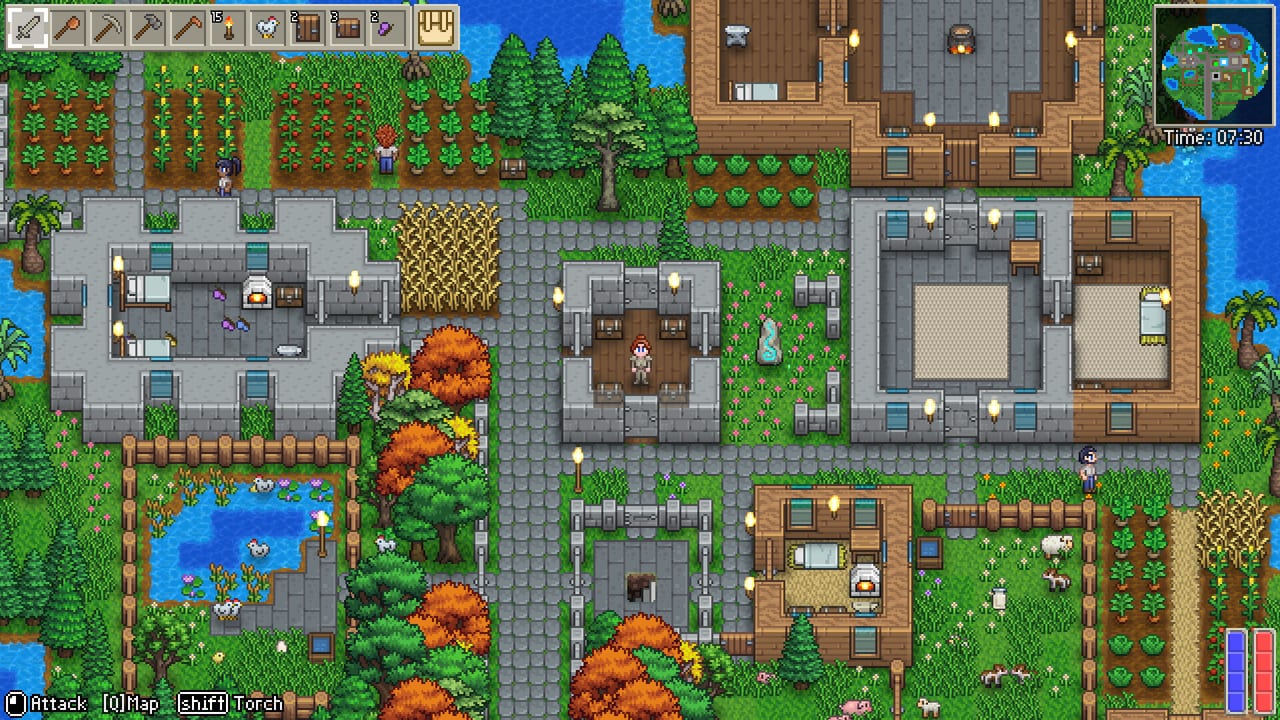
Delverium does not hold your hand for long. Sagestone Games drops you into a procedurally generated pixel world with a simple brief: gather, build a shelter, recruit people, and decide whether tonight is for crops or caves. Steam Early Access is scheduled for September 22, 2026. Until then — and during the first weeks of Early Access — the most reliable teacher is the free demo, which has been on Steam since February 2025. This page is a first-hour plan based on that demo, public playtests, and preview writeups. It will not invent a tutorial checklist the studio never published.
Start on the Delverium Steam page, confirm you meet system requirements, and decide whether this world is solo or a host world for friends. If anyone else is grabbing a controller, read controls and co-op before you generate. Hosting matters: the world lives on one PC while that player is online.
Create a character and a world
Character creation in the demo is short. Pick a look you can recognize on a split-screen, then generate a world. Preview players reported difficulty options (including calmer and harsher modifiers, with playtest notes mentioning Horde and Permadeath as things Sagestone was still tuning). Early Access may rename or rebalance those labels. If this is your first sandbox, pick the default/normal-style setting. You can always make a harsher world later; you cannot un-hate a permadeath wipe you did not understand.
You spawn in a wide starting biome: trees, grass, water, stone, and enough darkness at the edges to make you curious. Resist the urge to walk until the music changes. The first death in Delverium is usually “I wanted to see the coast” rather than a boss. Set a mental radius: everything you chop in the first twenty minutes should be close enough that you can sprint home when the sky turns.
First resources and first tools
Demo players typically begin with a basic axe, pickaxe, hammer, and torch on the hotbar. Early Access may change the exact kit, so check what you actually spawned with before you assume a recipe. The jobs do not change:
- Axe — trees and plants. Straw, wood, and plant fiber are the currency of the first shelter.
- Pickaxe — ore nodes on the surface and, later, dungeon walls. Do not save the pickaxe “for the mine” if you need stone now.
- Hammer — rocks that belong to house-building, not ore veins. If a boulder is in the way of a wall, this is the tool.
- Torch — place it. Holding a light helps, but dark interiors and caves want torches on the ground so you can see the gap in your wall.
Gather straw, wood, and stone in stacks you can actually carry. Expandable inventory is a selling point of Delverium, but the first upgrade is not free. Demo footage shows players stuffing fibers and copper ore into a bag that fills faster than they expect. Craft or place a chest as soon as you have a floor, then keep only tools, food, and a stack of walls on your person.
Copper shows up early enough that greedy players sprint toward it. Goblins and worse live near interesting ores. If you find copper on a coast or in a shallow cave, take a little, go home, and smelt it later. The crafting guide covers workbenches, furnaces, and nested recipes. You do not need a perfect campus on hour one. You need a closed box.
First shelter, then a valid NPC room
Night brings zombies. Preview players who stood still while placing walls learned that bats and the undead path through any hole you left “for later.” Build a rectangle, not a mansion:
- Walls on all sides.
- A door you can close.
- Flooring if the room check asks for it — demo players often reported flooring as part of a valid room even though the recruitment pitch stresses walls, door, bed, and light.
- A bed. Sleep/spawn is how you stop walking back from the shrine of your last bad idea.
- A light source. Place a torch. An unlit box is a coffin with extra steps.
That package is also how you recruit. NPCs in the demo and previews — a gatherer, a blacksmith, an agronomist, and a merchant — will tell you they need a home before they open a shop. Build a valid room (walls, door, bed, light source) and offer it. One NPC per room. Do not dump four beds in a warehouse and hope. Names you hear (Floyd, Agnes, Brynn, Mick in some recordings) are flavor; the roles matter. The gatherer and merchant turn junk into stock. The blacksmith is why you bother smelting. The agronomist is why the farming guide exists. Roster details live on the players hub.
If an NPC says the room is invalid, walk the perimeter. Demo builders missed a one-tile gap, forgot the torch, or placed the bed in a corridor. Fix the room before you wander off to “just grab more wood.”
When to farm versus when to delve
Delverium wants both loops, but they are not equal on day one.
Farm first if you died twice already, if you are playing with kids on the couch, or if your only weapon is still a gardening tool. Till a small patch near the door, plant whatever seeds you foraged (preview players found carrots, tomatoes, and other early crops), and water them. Demo players have described watering as lower-friction than Stardew Valley — still required, just less of a second job. A hoe and a watering can belong next to the bed, not in a chest at the far end of a dungeon. Livestock can wait until you have a fence, a gate, and a water trough; chicks and sheep wander the map or show up in the agronomist’s shop.
Delve second once you have a spawn bed, a stack of torches, a pickaxe, and a real weapon — a sword or axe for melee, a bow or staff if you found or bought one. The dungeons guide covers light, mining, and early threats. The demo includes an early boss; that is a gear check, not a story skip. Place torches as you go. Mine walls only when you have a path home. If ghosts, wasps, and spectres start stacking, leave. Food is how preview players described healing; empty pockets are how they described walking back from a Journey shrine.
Journey shrines (added around the multiplayer demo update) are fast travel and a reason to explore without abandoning the homestead. Activate them when you pass them. Do not treat the first shrine you see as a license to cross the whole map before you have walls.
A first-night checklist
- Closed walls, door, bed, torch.
- Tools still on the hotbar: axe, pickaxe, hammer, torch.
- One chest so fiber and ore are not living in your pockets.
- At least one NPC room if you already met a wanderer; otherwise mark their location and build in the morning.
- A handful of food, even if it is only forage, because the next mistake is a fight.
- A plan for hour two: either a workbench/furnace from crafting or a two-by-something farm from farming.
If you are hosting, say the plan out loud. Four people chopping random trees while nobody builds a door is how split-screen nights end early. If you want a second opinion on whether the game is for your group, read the review. For dates, price, and what Sagestone still intends to add, use Early Access notes and the links hub. Rankings can wait until you have eaten two harvests; then the tier list is useful instead of decorative.
The embedded video on this page is a real Day 1 session. Watch it for pacing — how long a shelter actually takes — not for a recipe you should memorize. Your seed is not their seed. Your job is the same: be indoors, lit, and employed before the zombies start testing the corners.
Frequently Asked Questions
Quick answers to the most common Delverium questions.
What should I do first in a new Delverium world?
Gather wood, straw, and stone close to spawn, then close a room with walls, a door, a bed, and a light. Read crafting before you overbuild.
How do I recruit the first NPC?
Build a valid room — walls, door, bed, and a light source — and offer it to a gatherer, blacksmith, agronomist, or merchant. Roles are summarized on the players hub.
Should I farm or enter a dungeon first?
Does Delverium have a tutorial I must finish?
The demo drops you in quickly after character and world creation. NPCs explain rooms, farming, and shops in conversation. There is no long on-rails campaign to “complete” before you play.
Is this getting-started page for the full 1.0 game?
No. Early Access is scheduled for September 22, 2026, and may last up to about two years. Treat this as demo and playtest advice, then check Early Access notes.
Can I do the first hour in co-op?
Yes. One player should host, one should build the door, and someone should keep torches on the hotbar. Bindings and split-screen notes are on controls.